
un-two-zero-vector-v People and Learning
PeopleLearningHero People and Learning
UN 2.0 Action area:

People & Learning

We will build more cutting-edge skills in all teams across the UN system – in data, digital, innovation, foresight and behavioural science. 

By hiring new experts, mainstreaming basic skills across all types of jobs, and providing learning opportunities to all colleagues, we will equip our teams with the cutting-edge expertise needed to tackle today’s challenges and drive transformative change.  

Tools to Kickstart Implementation​

Explore the collection of tools and resources to get started with your UN 2.0 implementation journey.

UN 2.0 Position Drafter for UN Volunteers

Need cutting-edge experts, especially on the ground? Leverage UN Volunteers (UNV)! Browse the extensive library of UN 2.0-related position descriptions (called “Descriptions of Assignment” in UNV) to draft roles for data, digital, innovation, foresight, behavioural science, and transformation exports. Use the dashboard to get a first draft and tailor it to your specific needs. 

UNV-DoA People and Learning

Generic Job Profiles​

Generic job profiles are the cornerstone of changing scope of positions. Over the last years, we have introduced new generic job profiles around data and AI that can now be used by teams to hire new colleagues.

GenericJobProfiles2-1024x737 People and Learning

Learning Resources​

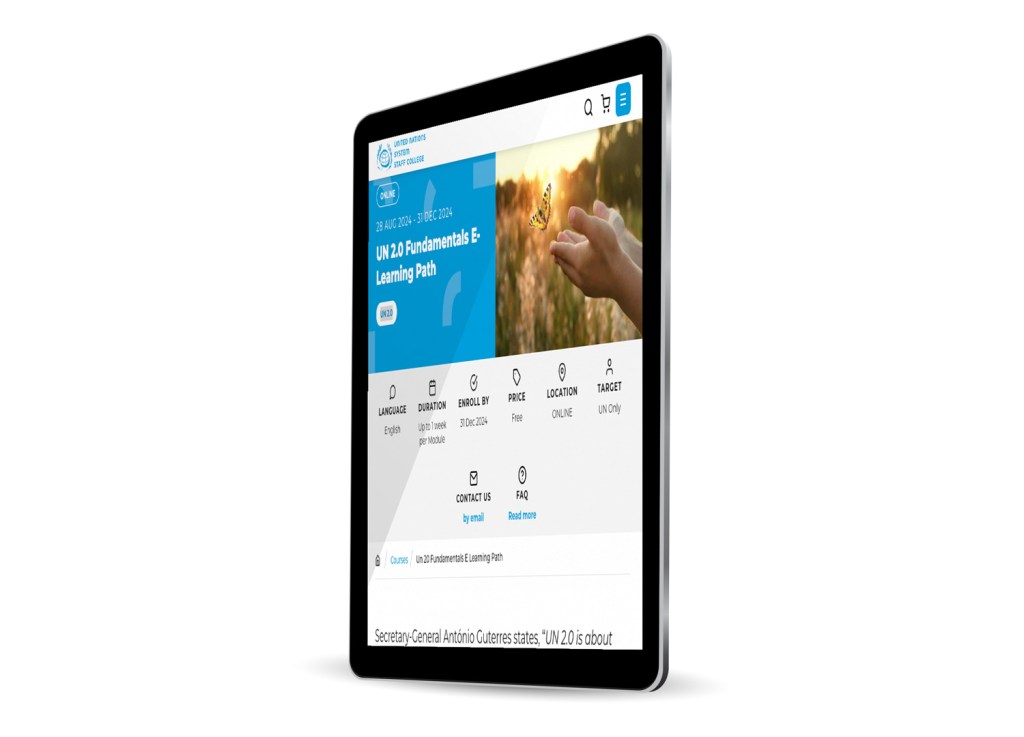
UN 2.0 E-Learning Path by UNSSC

Advance your UN 2.0 skills with free, self-paced modules from the UN System Staff College. Explore data, digital, innovation, foresight, and behavioural science fundamentals—perfect for exploring UN 2.0 for your everyday work. All UN colleagues can register!

Stay tuned for more...

Many UN entities offer UN 2.0 related learning offers, including free of charge. We will share our selection with you soon! 

UNSSCLearningPath2-1024x737 People and Learning
UNDP-Sharepoint-ShortA-300x205 People and Learning

UN 2.0 UNDP Learning site

A tool to accelerate progress, rethink, refocus, and recharge towards the achievement of the SDGs. This learning site includes LinkedIn Learning sources, webinars, articles and more on Data, Digital, Innovation, Foresight and Behavioural Science.
PeopleLearning-External-Resources-Short-150x150 People and Learning

UN 2.0 E-Learning Path by UNSSC ​

Advance your UN 2.0 skills with free, self-paced modules from the UN System Staff College. Explore data, digital, innovation, foresight, and behavioural science fundamentals, perfect for exploring UN 2.0 for your everyday work. All UN colleagues can register!

Stay tuned for more...​

Many UN entities offer UN 2.0 related learning offers, including free of charge. We will share our selection with you soon! 

UN 2.0 Roles Feed​

Expert Opportunities Feed 

Stay updated with our weekly curated selection of data, digital, innovation, foresight, and behavioural science job openings on LinkedIn across the UN system.

Asset-6 People and Learning

3 Key Actions for the UN System in the area of People & Learning

In the area of People & Learning, the UN 2.0 Action Plan includes four essential actions all UN entities will take for building more cutting-edge skills and capabilities.

Action 9

Recruit dedicated talent
Recruit dedicated talent: Accelerate hiring for dedicated roles in data, digital, innovation, foresight, behavioural science and culture change across more units in line with needs, supported by updated gap analyses, new/updated job profiles and non-staff fellowship programmes.

Action 10

Mainstream new expertise
Increase the share of all other job openings with minimum experience and skills requirements related to UN 2.0, in line with entity needs.

Action 11

Expand UN 2.0 learning
Integrate UN 2.0 and culture priorities into learning strategies, programmes, plans and budgets, sharing resources where beneficial, including UNSSC as a centre of excellence, new academic / training partnerships, and more online learning options

Examples

Action 9:
Recruit dedicated talent

Gap Analyses
Many entities may need to realign existing positions to match new profiles due to budget constraints. Reviewing needs of UN 2.0 positions, including at lower seniority levels, can help prioritize.

Action 10:
Mainstream new expertise

Mainstreaming Basic Skill Requirements
Many job openings can include minimum requirements for data and digital skills. For example, in political affairs roles, basic data analytics skills could always become ‘desirables’.

Action 10:
Mainstream new expertise

Using Established Frameworks
Entities like WHO have developed frameworks, such as the Digital Competency Framework, to guide the shift toward necessary digital skills across different roles.

Action 11:
Expand UN 2.0 learning

Reinforce Entity-Level Networks
Strengthen internal knowledge networks to address mandate-specific key challenges and foster collaboration across all staff levels.

Action 11:
Expand UN 2.0 learning

Promote Knowledge Networks
Entities can encourage colleagues' participation in entity-wide communities through internal communication campaigns and identification of key champions.

Action 9:
Recruit dedicated talent

Fellowship Programmes
Entities can utilize fellowship programmes including partnerships with UN Volunteers offering routes to onboard talent on a needs-focused basis. Examples include the WFP Innovation Fellowship.

Action 10:
Mainstream new expertise

Define Levels of Desired Skills
Tailor UN 2.0 skill requirements to fit teams. For example, junior staff may need technical skills, while senior leaders may require a basic understanding of UN 2.0 concepts and applications.
UN 2.0 in numbers

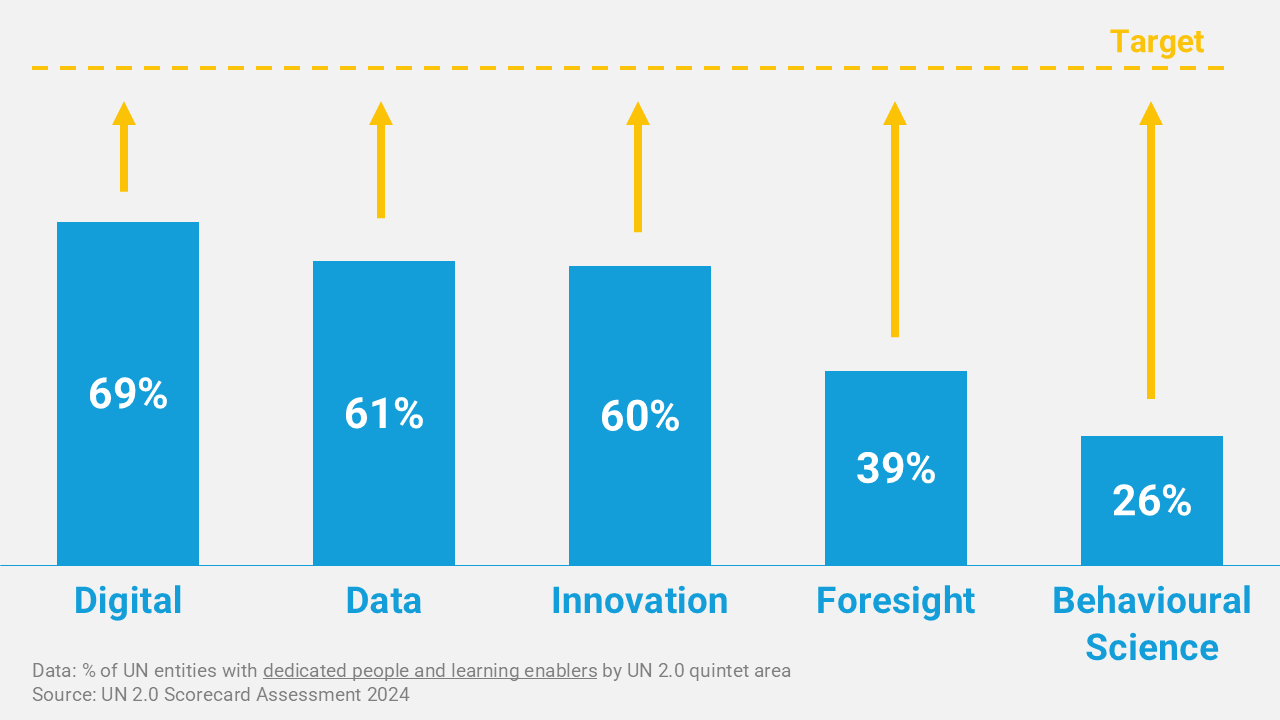
Where Do We Stand?

Progress of UN system modernization in the area of people and learning in 2024

Glossary

  • Dedicated Roles: Positions with specific expertise in data, digital, innovation, foresight, behavioural science, and change management. Can additionally focus on a functional/programmatic area.
  • Across More Units: The integration of these roles should occur throughout the organization, not just in headquarters or specialized centers, ensuring expertise is available where most needed.
  • Gap Analyses: Assessments to identify current workforce capabilities and determine where new or shifted roles are required to meet evolving needs.
  • New/updated Job Profiles: Standardized job descriptions that facilitate the recruitment process by outlining pre-approved qualifications and responsibilities for key roles across the UN system.
  • Fellowship Programmes: Initiatives that bring in non-staff talent for temporary, specialized roles to support teams on specific use cases, including internships.
  • UN 2.0 Experience and Skills Requirements: The essential skills and knowledge in areas like data, digital, innovation, and other UN 2.0 areas that are beneficial for non-UN 2.0 expert roles.
  • Minimum Requirements: Baseline skills or qualifications that candidates should possess in UN 2.0 areas to be considered for non-expert roles, ensuring readiness for modern, data-driven work environments.
  • Learning Strategies/Programmes: Entity-level plans to enhance staff capacity and promote continuous learning, e.g. UN Secretariat Learning & Development Strategy, UNICEF Global Learning Strategy, etc.
  • Center of Excellence: A hub or team recognized for its expertise and leadership in having specific expertise and able to provide support, services or programmes to UN teams.
  • Online Learning Options: Digital platforms and courses that offer flexible, accessible training opportunities, including bite-sized learning integrations.

Comments or Suggestions?

If you have feedback or additional resources to share, please feel free to reach out to us using the following options

Cookies Notice

We use cookies and other identifiers to help improve your online experience. By using our website, you agree to this. To learn more, including how to change our settings, see our cookie policy.
