Kenyan and Ugandan Start-ups are supported through the Transformative Urban Mobility Start-Up (TUMI) initiative for their affordable and accessible urban transport solutions offering more sustainable travel options.
HLG-MOS (High-Level Group on Modernization of Official Statistics)
The High-Level Group for the Modernisation of Official Statistics (HLG-MOS) was established by the Conference of European Statisticians to advance the modernisation of official statistics.
Myanmar Information Management Unit (MIMU) offers info management services for analysis and decision-making. It maintains a data repository accessible through maps, databases, and tools, supporting coordination and planning.
The Archives and Records Management Section (ARMS) is actively working to preserve the current “born-digital” records of the UN as well as digitize the historical paper archives to ensure our history remains accessible to future generations.
Initiative offering practical guidance for using behavioral insights in disaster risk reduction: risk communication, community engagement, and awareness campaigns.
OCHA uses predictive analytics for anticipatory action, reducing humanitarian impacts of forecasted disasters through faster, more cost-effective responses.
Focused on accelerating equitable access to digital learning solutions and building a community of changemakers. Powered by the Gov. of Finland, the Hub aims to help tackle the learning crisis and explore new pedagogies, tech and approaches.
The World Summit on the Information Society (WSIS) Forum is a global multi stakeholder platform with an annual conference that fosters global dialogues on leveraging the power of Information Societies to accelerate sustainable development goals.
Channel to follow UNDP’s Strategic Innovation initiatives and learnings – pioneering new ways of doing development that build country’s’ capacity to deliver change at scale.
A study providing information and scenario analyses for decision-making in the UNECE region’s forest sector, covering Europe, North America, and the Russian Federation.
Supporting the implementation of Responsible Data for Children, e.g. for adolescent mental health data in refugee populations in Uganda or Online Nutrition Database in Afghanistan.
Elsie Initiative for Field Missions: Gender-responsive Design
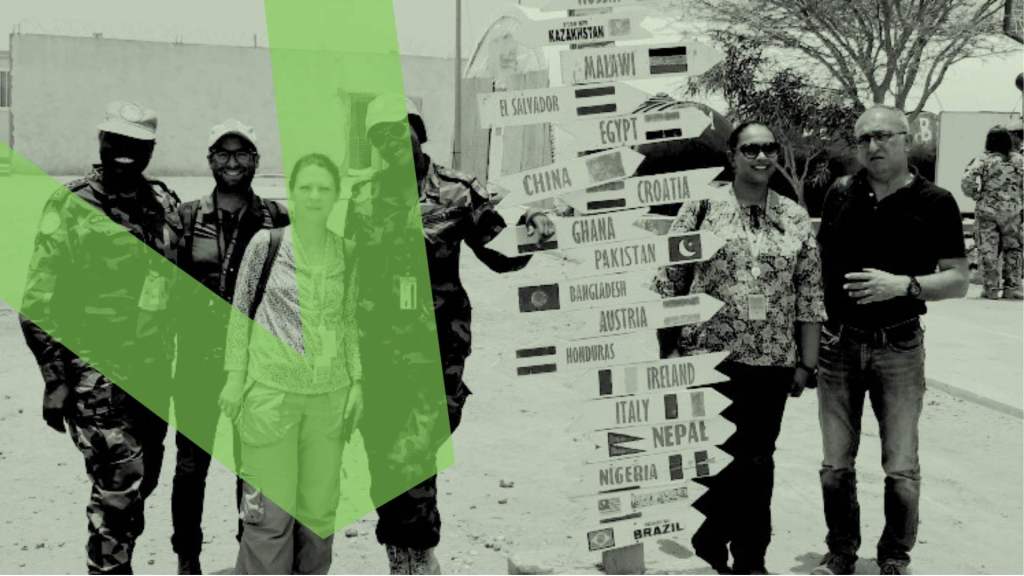
As part of our commitment to attaining gender parity, we are implementing gender responsive designs through the Elsie Initiative for Field Missions project to create safer, more secure and more appropriate accommodation solutions for women peacekeepers, thereby enabling their increased participation in peacekeeping.
Identify Grassroots Solutions through Positive Deviance
UNDP and GIZ study Ecuadorian cattle farming to identify farms with low deforestation. Using statistical models and diverse data sources, they seek to recognize successful strategies for sustainable agriculture in the Amazon region.
Global Counter-Terrorism Coordination: a Digital Leap
UNOCT and OICT’s secure, digital platform enhancing global counter-terrorism coordination within the UN system and with Member States, fostering partnerships, and boosting visibility of UN efforts.
A UNDP & Government of Bangladesh digital transformation catalyst to disrupt the traditional civil service mindset – and make digital innovation work for the poor in Bangladesh.
EarthMap: Agroecological Data Integration in North Macedonia
North Macedonia integrates agro-ecological data into EarthMap, offering detailed open-access information to promote sustainable agriculture and informed decision-making.
The Asia-Pacific Information Superhighway (APIS) aims to bridge the digital divide with digital connectivity and inclusivity, fostering a robust digital economy and society across the region.
FAO’s Hand-in-Hand Initiative supports the implementation of nationally led, ambitious programmes to accelerate agrifood systems transformations by eradicating poverty, ending hunger and malnutrition, and reducing inequalities.
We use cookies and other identifiers to help improve your online experience. By using our website, you agree to this. To learn more, including how to change our settings, see our cookie policy.